
GPT-6 Astra Made Me Realize I’d Been Settling
林政賢 ·
From Claude Fable 5.1 to GPT-6 Astra
When I last wrote “The Battle of the AI Magic Lamps”, I was still standing in the middle of the market, carefully reading the instructions for both lamps.
I made my position clear in that piece: Claude was my main tool. Websites, apps, and the sort of ideas that pop into your head when a sensible person would sleep on them first—I took them all to Claude.
Then I actually brought the other lamp home.
Life’s best sequels often begin
with the author eating their words from the previous installment.
If the last few days were a fairy tale, it would go something like this: I invited the new genie to tour my castle, expecting to replace a few windows at most. It walked around, then unrolled a sheet of paper that just kept getting longer.
“Master, the windows can wait. This treasure chest mixes up everyone’s belongings when someone else logs in.”
I stared at the list and suddenly wondered where I had put the castle’s warranty.
Unfortunately, the AI and I had built this castle together.
The warranty department was also the AI.
Very convenient. Very exciting.
From Patching a Few Holes to Rediscovering My Castle
This wasn’t my first time asking two AIs to check each other’s work.
Back on Base44, I had used Sol to look over websites and apps Claude had built. Occasionally, it caught something Opus 5.0 had missed. That seemed reasonable: give someone else a flashlight in the same room, and they’ll illuminate different corners.
So when I properly started using OpenAI’s tools and let GPT-6 Astra take over my existing projects, I expected much the same.
A few more holes patched. A little tidying up.
Besides, some of that work had already been optimized with Fable 5.1. Part of me thought: surely it was good enough by now.
“Surely it’s good enough” may be the gentlest opening line to any engineering disaster.
This time, the findings reached into places I hadn’t even thought to check.
Take our official website (Tangyi.mx), for example. Drafts in the admin system really didn’t appear on the blog page. So quiet. So well behaved. Apparently tucked safely away in a drawer.
Yet the backend was still sending out three drafts, including their full text in four languages, along with the response.
Not appearing on screen doesn’t mean the data wasn’t sent.
That issue has since been fixed. But seeing the findings for the first time hit much harder than “move that button two pixels left.” What I thought was hidden simply wasn’t being drawn on screen.
Then there were the homepage article cards.
The page displayed just three posts, while fetching complete records for multiple articles, including their multilingual bodies. It was like asking a waiter what was for dessert and having the entire central kitchen wheeled up to your table. Freezer included.
After the fix, the raw JSON response for the equivalent article-list request fell from 817,158 bytes to 46,549 bytes—a reduction of about 94.3%.
Raw JSON payload before and after the fix
Before optimization817,158 bytes
After optimization46,549 bytes
Source: website optimization verification on 2026-09-06. The old response included drafts and full articles; the new response contains summaries of published posts. This measures reduced data transfer, not model benchmark performance or whole-site loading speed.
These are before-and-after payload sizes from a real project. They don’t mean GPT-6 is 94.3% faster than Claude, or that the whole website loads 94.3% faster. What I can say is that the kitchen that never needed to reach the table is finally staying out back.
Then came long-form translation: content could be cut off halfway through, and the old workflow lacked sufficient checks to catch missing material.
In fairy-tale terms, a book gets as far as “The prince finally opened the princess’s chamber door,” followed by blank pages. The back cover still says “The End.”
The reader thinks it’s an open ending.
The author has no idea the second half never arrived.
The Scariest Spell Is “Success”
Checks on other projects brought more surprises. The kind you get when you open a bill.
One was our own card-game app, 紫色微醺夜X Card Game. It’s a question-based card game for gatherings with friends, dates, and breaking the ice. It is available on the App Store as a free download, with optional in-app purchases.
This review uncovered problems such as favorites on a new device potentially overwriting existing cloud favorites, and favorites not being properly separated after switching accounts on the same device. Buying access after a trial expired could also leave the old expiry date in place.
The fairy-tale version: the prince pays to extend his stay at the castle, but the guard waves last week’s visitor pass and sends him off to sleep in the stables.
As for the AI creative-tools platform we developed, TangYi Workshop, the code review found that some subtitle-saving flows could receive a server error while the interface still reported that the work had been autosaved. Some jobs could be set to run locally, yet their execution path could still lead to the cloud.
These findings are at different stages of verification and repair, so I can’t bundle them together as “all fixed.” But they share something that made me sit up straight: an astonishing number of bugs can live in the gap between looking finished and actually being finished.
I used to be the one saying, “Something looks odd here,” before the AI went looking for the cause.
This time, Astra proactively dug into quite a few places I hadn’t even had time to frown at.
I began to feel that this new lamp was shining deeper than I had expected.
But the place that really left me speechless turned out to be a restroom.
The Genie Enters Blender and Renovates a Restroom
I’m currently making “Cigars, Chips, and the Time Traveler” (《雪茄、晶片、時間旅者》), an original science-fiction short film planned for release soon.
For this project, I let AI large language models (LLMs) operate my 3D software, Blender, helping build the film’s sets from my script and design references.
If you’ve never used Blender, think of it as a film studio inside your computer: you model a 3D space, add props and characters, then plan angles and movement with a virtual camera.
You don’t have to rent an actual restroom. Put the faucet in the wrong place, though, and the director will still be upset.
One scene takes place in a restroom. The set has to accommodate character positions, the relationships between props, room for a fight, and the camera’s eventual path. It has a role in the story. You can’t just throw up a few walls and tell the actors to make do.
I supplied a written script, along with multi-angle scene designs I had first generated using an AI image model.
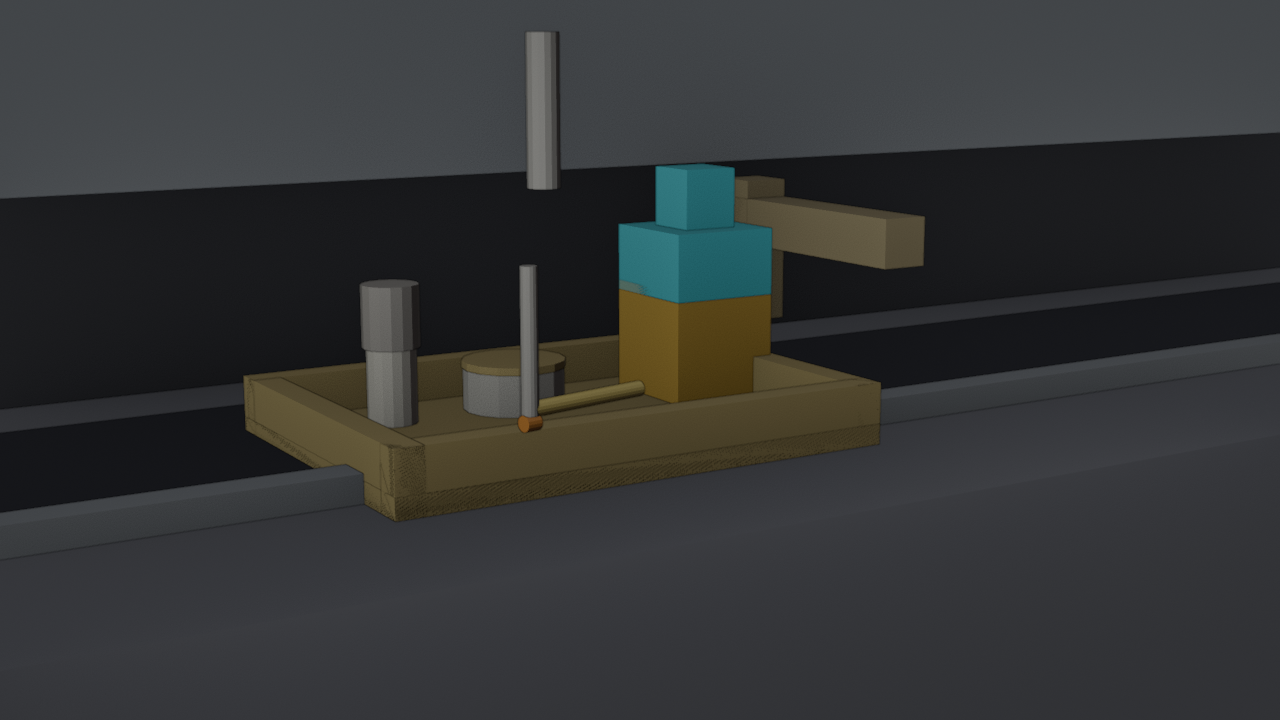
Previously, I had Fable 5.1 build the Blender scene and combined it with characters and motion assets from Adobe Mixamo. For my needs, the overall result was still too rough to use.
The geometry could exist without the scene coming alive. A character could move without that movement belonging to my story.
When the director asks for a desperate dive to save someone, and the image says only “this person is moving,” there’s an entire movie between the two.
A Director’s Need Becomes a Tool
Camera movement was another hurdle. When I previously had Fable 5.1 operate Blender, I repeatedly described where the camera should go, but the results never quite matched what I wanted.
So I decided to develop my own phone-based control tool, TangyiCam. It lets me operate Blender’s virtual camera from my phone and physically walk through the shot I have in mind.
Fairy tales usually teach you to make your wishes patiently. What I learned was that when you’ve explained a wish until your throat goes dry, you can also build yourself a remote control.
Mixamo was part of the character-and-motion workflow here. The clear progress I saw this time came from the scene rebuild after Astra took over. Character performance and continuous camera movement still need their own tests.
This time I asked directly: go back to my scene designs and storyboards, and rebuild it.
In my own experience, within roughly two hours it delivered a scene that genuinely changed my impression. The details were closer to the design, and it had added materials too.
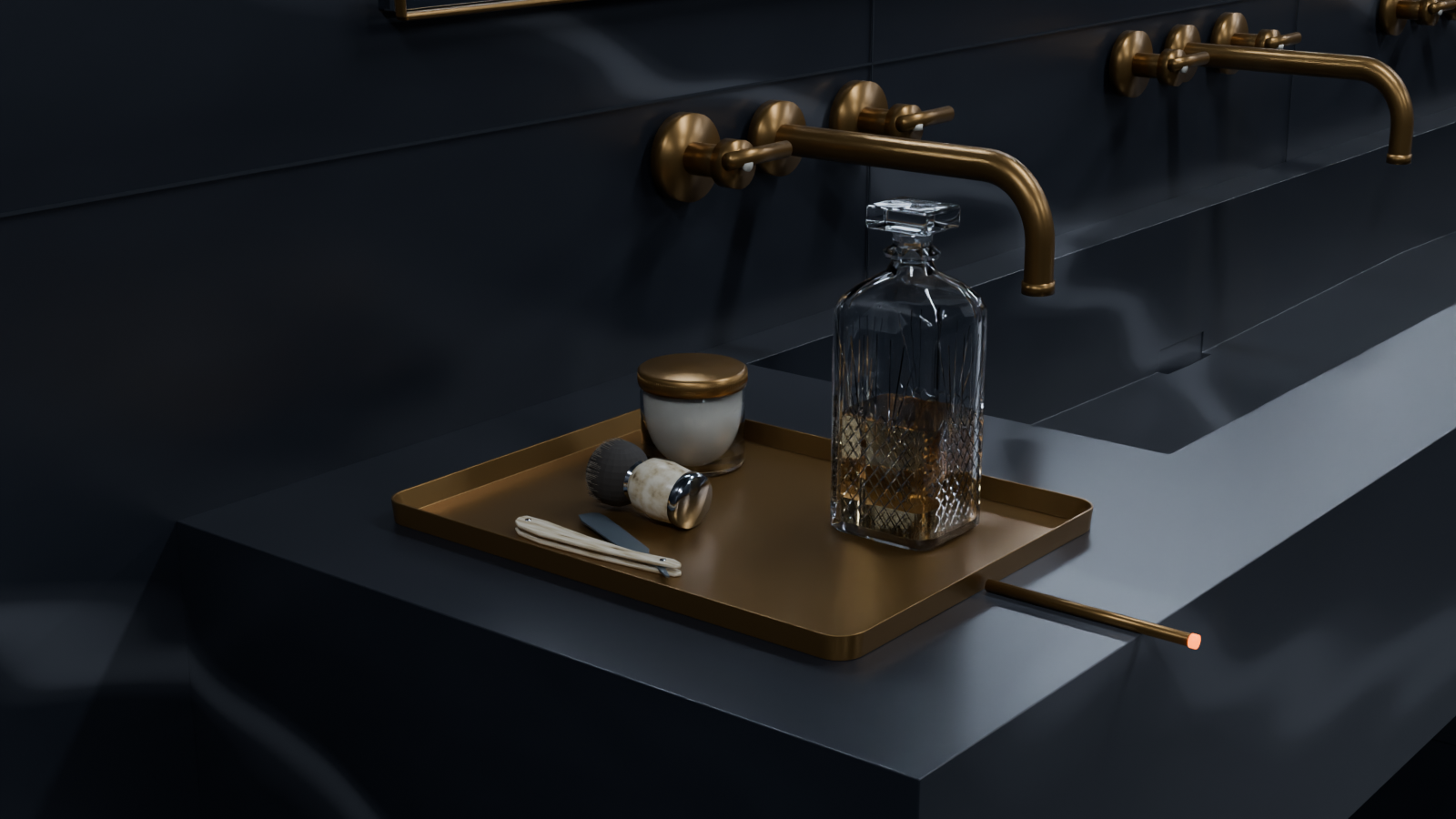
The black stone began to have a surface, the brass caught the light, and the crystal bottle started to look like something that could refract light and belong in a film.
My first thought was: finally, I don’t have to keep using my imagination to fill in what the model is missing.
One Set, from Design Reference to Two 3D Versions
First, here’s what I wanted to film. Then come the results of two workflows that took control of Blender. In order: the original AI design, the Claude version, and the GPT-6 Astra version. Click an image to inspect the details.
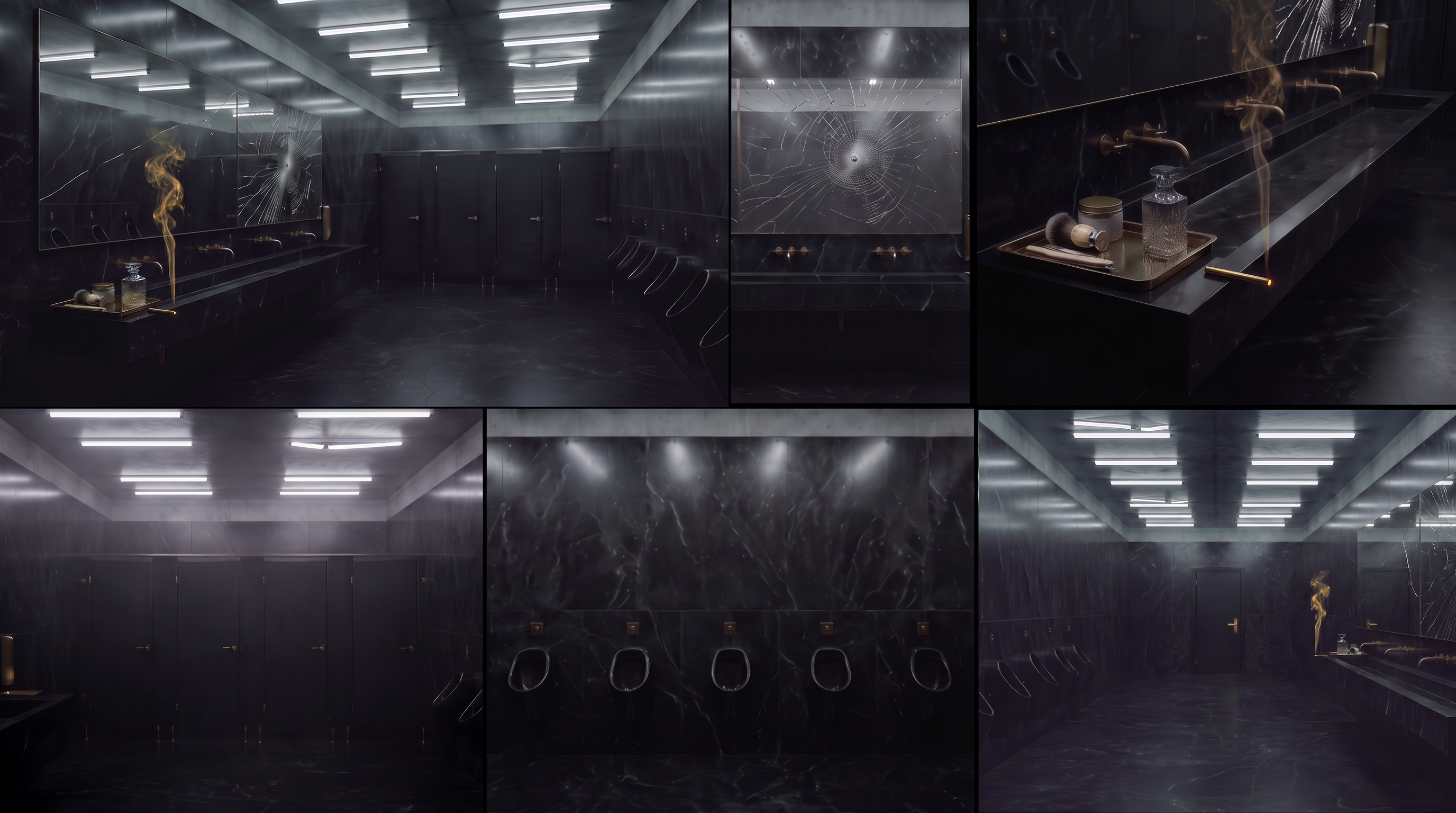
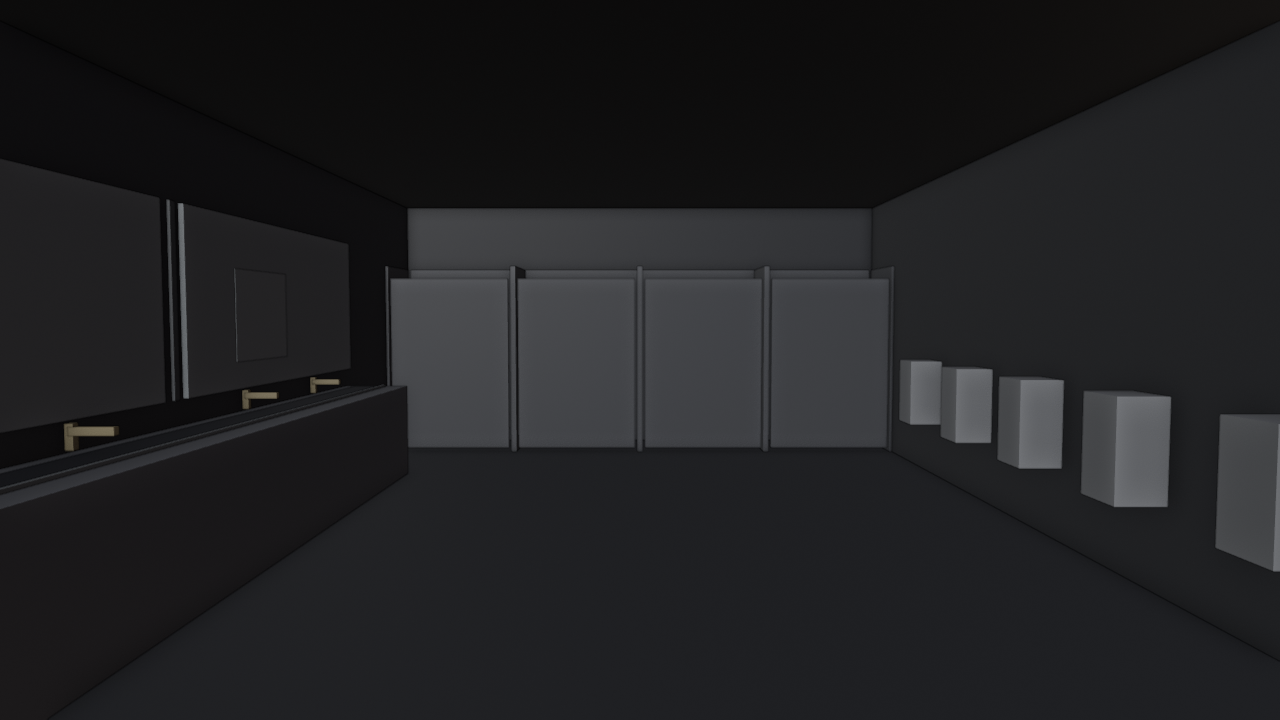
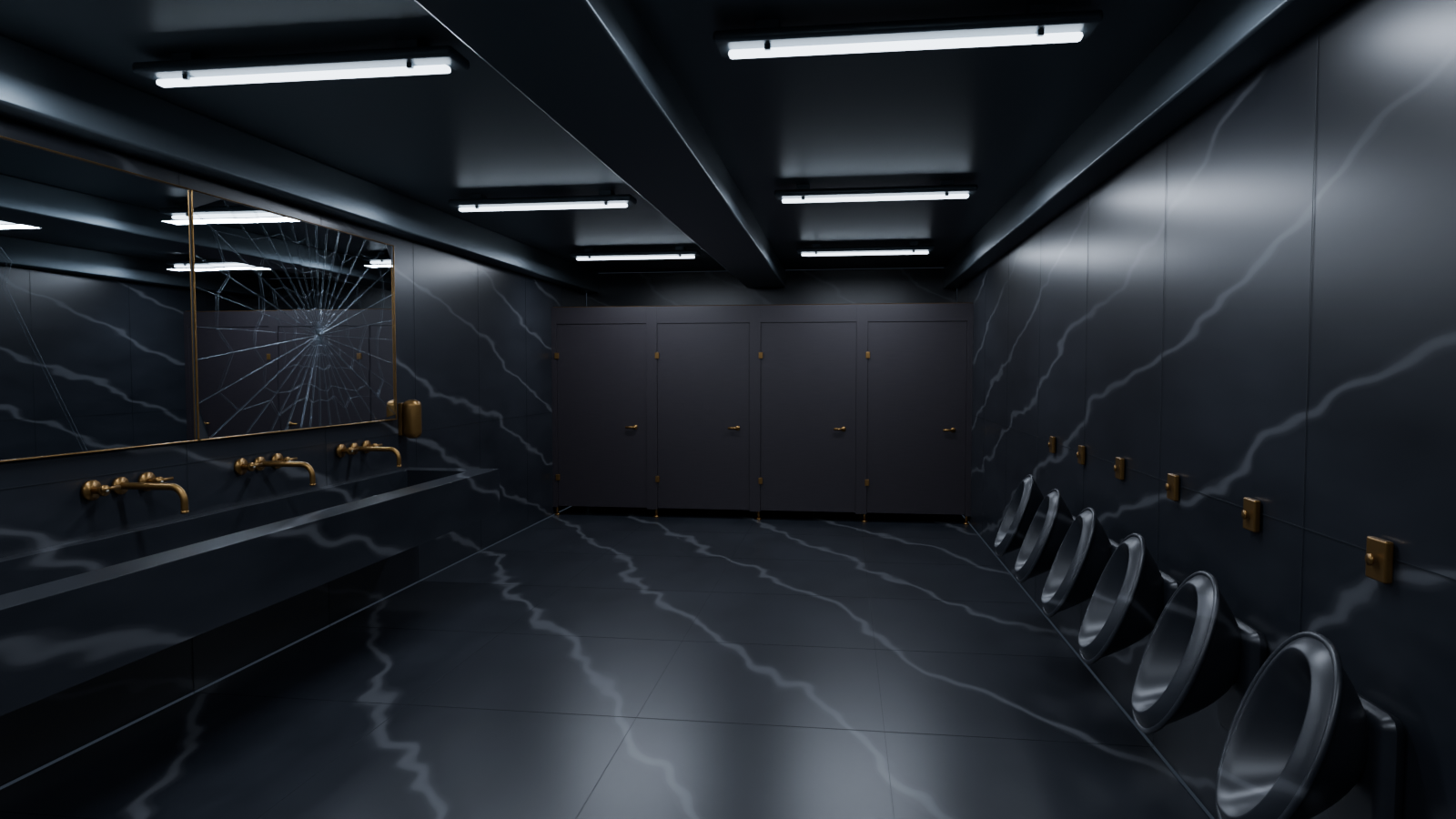
The first image is the design target I gave the AI; the next two are 3D results from two workflows. Their angles, materials, and stages of completion differ. These images document the distance between design and delivery.
The later refinements made an even stronger impression: how the faucets align, how the bottles sit in the copper tray, whether the stone veining is too coarse, how much room the stalls leave, and whether parts of a light tube can dim slightly, as if there’s a loose connection.
Most people renovating a restroom want the lights to work.
I spent time asking the AI to break them. Tastefully.
Sometimes a filmmaker’s occupational habits are enough to earn even a genie hazard pay.
A Closer Look at the Countertop Details
Here we move closer to the tray, comparing the original AI design, Claude’s 3D props, and Astra’s 3D props. I chose similar oblique views to make the relationship between the bottles, tray, and counter easier to compare.
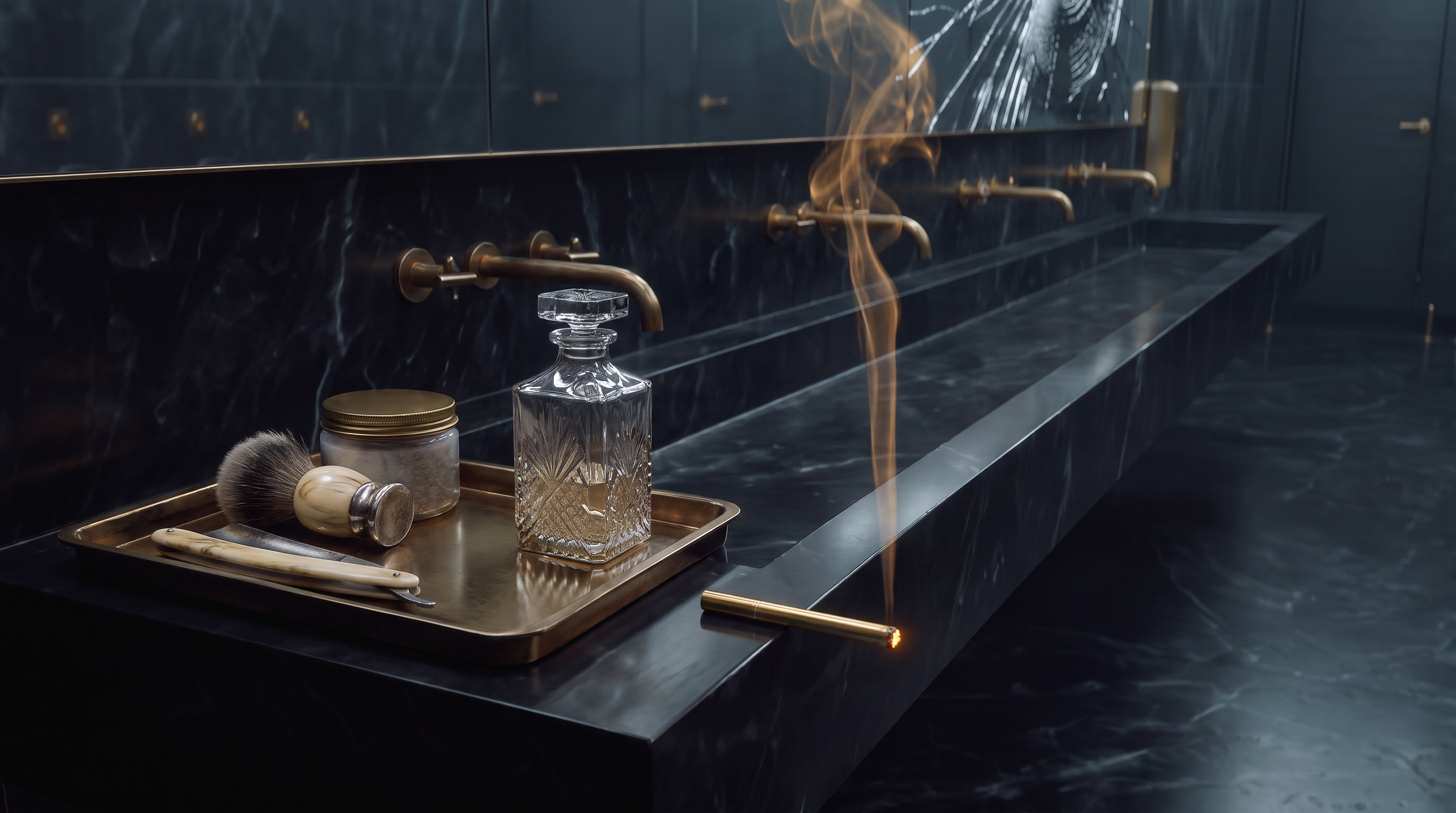
The director’s experience · A subjective assessment
If I had to put an intuitive number on it, I’d say the scene felt close to 90% of the way to my design reference.
That 90% is my subjective satisfaction with the work. There wasn’t an instrument standing by to score the faucet. Nor do the refined images above mean everything was completed within those first two hours.
But for someone who had constantly been making excuses for the results, “I want to keep filming with this” is a big change.
Someone in This Fairy Tale Still Hasn’t Clocked Out
At this point, it sounds as though Astra should enter wearing a cape and riding a white horse.
Hold on. The horse needs an inspection too.
It still made mistakes this round: a door opened the wrong way, props appeared to float, and its first attempt at engraving the crystal bottle used added lines that didn’t achieve the effect I wanted.
I pointed those things out.
It kept revising.
So the director didn’t retire during those few hours. I finally felt that my revision notes could turn into something in front of me more quickly.
That’s where I felt the difference: I brought the same requirements, reference images, and unwillingness to settle. This time, the work reached a place where I wanted to keep going sooner.
Observations from this project · Not a controlled blind test
| What mattered to me | My earlier experience with Claude | What I observed with Astra this time |
|---|---|---|
| Existing websites and apps | Issues remained after multiple rounds of building, fixing, and optimizing | Further issues found with data separation, workflow states, and saving |
| Blender scenes | Still far from my design requirements; difficult to continue working with | Clear progress in scene detail and materials, followed by further refinement |
| Did I need to point out problems? | Yes | Still yes |
| Character performance and continuous camera movement | Earlier results did not meet my needs | Formal acceptance testing not yet completed |
This table records my experience on these projects. Time, context, tools, and revision rounds were not held constant under laboratory conditions. I also can’t attribute every bit of progress solely to the model itself.
But I can say this honestly: so far, on the projects in my hands, the difference I’ve felt with GPT-6 Astra is too large to brush aside with “each has its strengths.”
Claude helped me build many things that once existed only in my head. A new model arriving doesn’t erase that. I’m also ready to give Astra more demanding work now.
My tools have never asked me to swear allegiance.
Only my credit card checks in regularly about our relationship.
The Second Lamp Also Shone a Light on Me
Looking back, perhaps what shook me most was my own standard of “this should be good enough.”
We’ve revised it so many times. The previous AI said it was finished. We’re tired. It’s easy to take the result we currently have and mistake it for the best that can be done.
Until another lamp lights up.
Then you discover that some compromises were never necessary.
In fairy tales, people who find a magic lamp usually ask for a palace first. The stories rarely go on to ask whether its doors open the wrong way, whether its treasure chests mix in someone else’s favorites, or whether that crystal bottle in the restroom is actually touching the counter.
I happen to have been writing that part these past few days.
Astra hasn’t finished its formal tests for character animation and continuous camera movement, and the short film is still moving toward completion. Next time, it may make another mistake that has me holding my head. I’ll keep watching, and I’ll keep writing.
This time, though, I’ve already put harder wishes on the table.
As for my third wish, I’ve decided.
Please make those two light tubes
malfunction a little more naturally.
—Lin, Zheng Xian / TangYi Studio
Coming soon · Short film and creative tool
The Next Story Is About to Begin
“Cigars, Chips, and the Time Traveler” is planned for release soon. This time, we can see together what eventually happens in that restroom on screen.
I’ll also keep refining TangyiCam, my phone-based camera-control tool, and make it available on TangYi Workshop for everyone to use free of charge. So someone else with a shot in mind can pick up a phone and step onto their own 3D set.
You’re welcome to follow TangYi Studio or subscribe to our newsletter for news about the film’s release and the tool’s availability.
Follow TangYi Workshop →Further Reading
Before the Second Lamp Lit Up
From choosing a tool to actually building an app—and the mistakes you still have to point out yourself.
Author:林政賢(Director · Gen AI creator & engineer · Founder of TangYi Studio)