
NVIDIA Maps Viral Proteins in 3D: What Comes After AI Prediction?
林政賢 Zheng-Xian Lin ·
AI can now predict the three-dimensional shapes of viral proteins. Does that mean vaccines will soon arrive at the click of a button? Keep the laboratory open. NVIDIA's announcement is better understood as a map researchers can consult and compare: it points toward promising routes without completing the journey.
What has been opened to researchers?
On September 24, 2026, NVIDIA announced a collaboration with Google DeepMind, EMBL-EBI and other research teams to make predicted protein complex structures covering more than 2,800 viruses available through the AlphaFold Database. [1]
Think of a “complex” as a small team of components. Researchers want to understand not only what an individual protein looks like, but also how it might fit together with other proteins. These 3D models are computational predictions, not experimental photographs of every combination.
The database update gives more detail: the collaboration analyzed 2,812 viral proteomes across 23 virus families relevant to human health, producing 5,279 high-confidence heterodimers and 2,749 high-confidence homodimers. In simple terms, the former pair two different proteins, while the latter pair two copies of the same protein. [2]
Those figures measure different things. The number of proteomes analyzed is not the number of newly discovered viruses, and the number of structures is not the number of available drugs.
NVIDIA's contribution goes beyond attractive structures
NVIDIA also released the BioNeMo Structure Prediction Pipeline. According to its documentation, it connects sequence preparation, structure prediction and subsequent quality assessment in a workflow that runs on GPU clusters. [3]
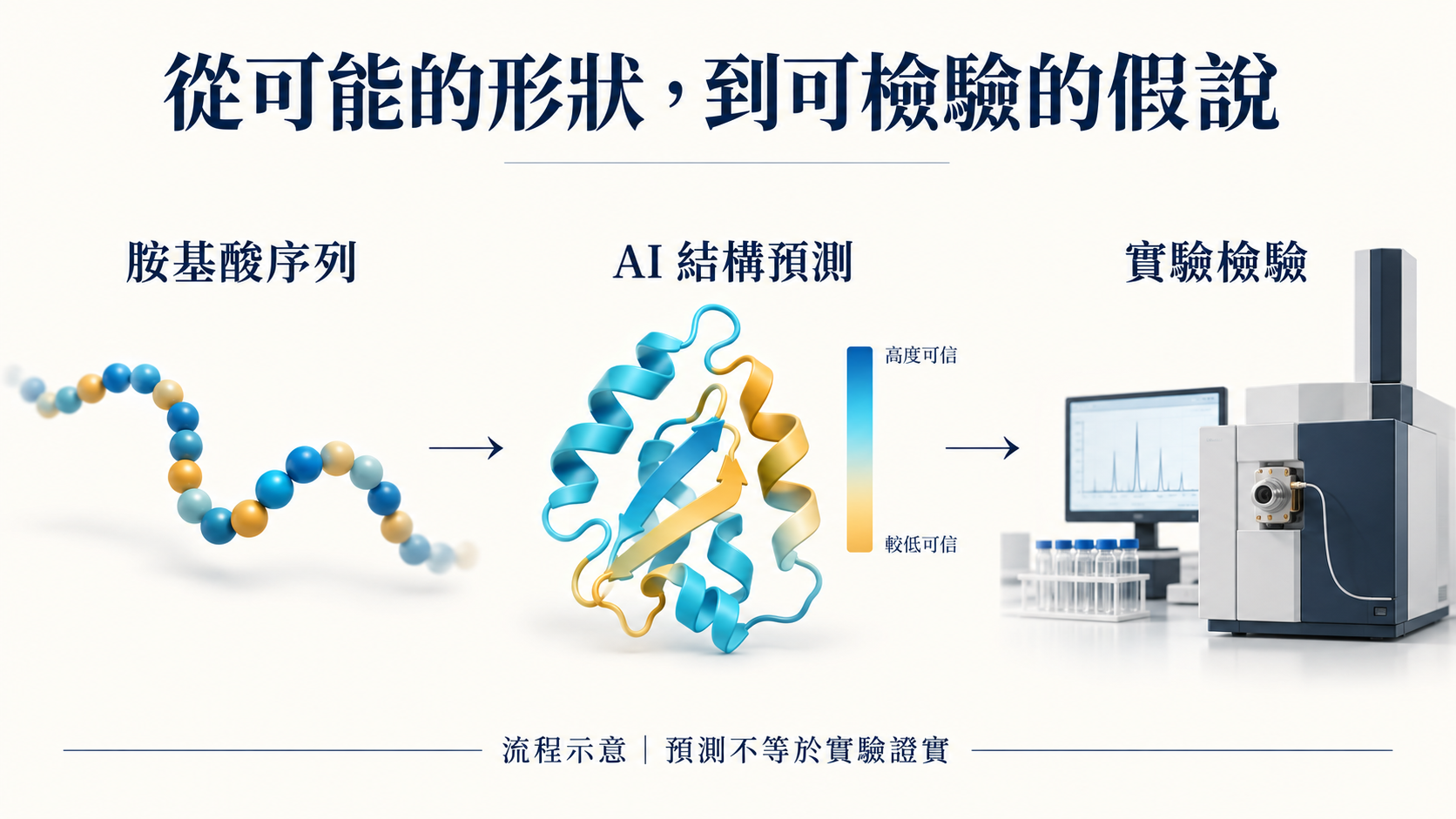
This offers another way to think about AI: useful results depend not only on the model, but also on how data is prepared, how outputs are checked and whether others can build on the work. Anyone who has worked on an image production project will recognize the difference between producing one picture and creating a workflow someone else can take over.
Open code does not mean a home computer can easily rerun everything. The project's requirements include a Slurm cluster and NVIDIA GPUs with at least 80GB of memory. For most readers, consulting the published data and running the full prediction pipeline are very different commitments. [3]
A structure cannot answer every question
EMBL emphasizes that predicted structures can suggest protein shapes and interactions, but cannot on their own explain how a virus behaves or determine the effects of mutations. Experimental research is still required. [4]
“High confidence” should therefore be understood as the model's confidence in a particular prediction. It is not vaccine efficacy, nor proof that a treatment is safe and effective. Confusing these meanings may make a story exciting, but makes the information less accurate.

The illustrations in this article follow the same boundary. They are AI-generated educational concepts that help explain the process. They do not depict experimentally measured structures of particular proteins or represent experimental results.
Open data lets the next researcher ask a new question
The value of this release is that research does not always need to start from scratch. EMBL says the open resource also aims to lower barriers for researchers in less well-resourced regions and include understudied viruses. [4]
Our view at TangYi is that a useful AI practice does not treat “generated” as “finished.” It preserves sources, explains limitations and lets the next person decide what can be reused and what needs verification. That habit matters in science, content production and internal business automation alike.
This news gives us reason for optimism, provided that optimism is properly placed: AI supplies shapes and directions to investigate; scientists use evidence to determine how far those leads can go.
Sources checked September 26, 2026. This article draws on official announcements, database update notes and public project documentation. We have not rerun the models or independently validated the dataset. References [1]–[4] correspond to the original sources below.
Sources
- [1] NVIDIA|How Open Science Can Help Researchers Prepare for the Next Pandemic
- [2] AlphaFold Database|September 2026 database update
- [3] NVIDIA BioNeMo Structure Prediction Pipeline|README
- [4] EMBL|AlphaFold Database adds viral protein complexes to support pandemic preparedness
Author:林政賢(Director · Gen AI creator & engineer · Founder of TangYi Studio)